
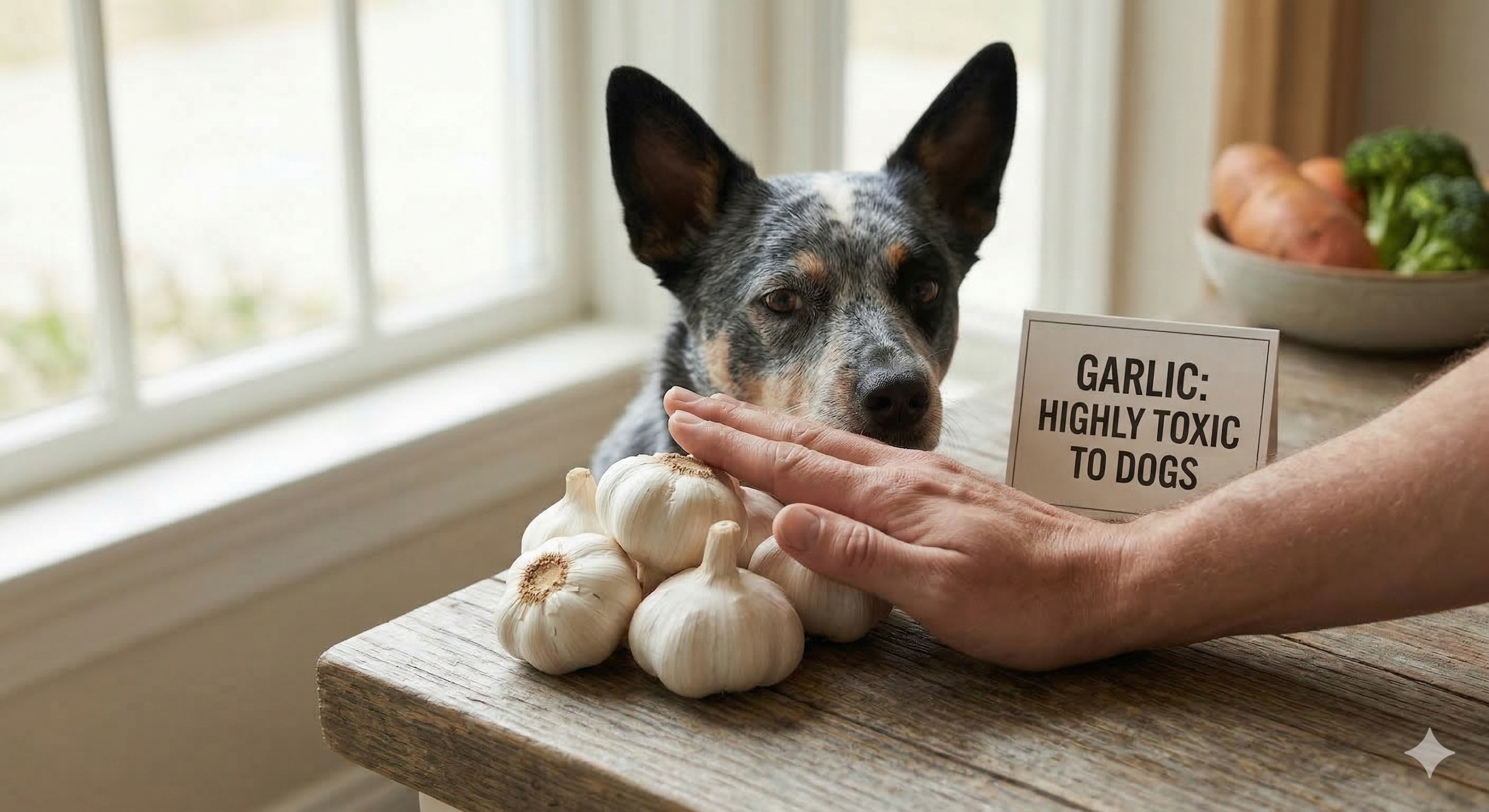
Can Dogs Eat Garlic? A Vet-Approved Guide to Toxicity
🚨 VET-APPROVED DISCLAIMER
This article is an AI-generated educational tool. The information provided is not a substitute for professional veterinary advice. Always consult with your veterinarian.
Garlic is a staple in human kitchens, praised for its flavor and purported health benefits. But can this pungent bulb be shared with our canine companions?
The definitive, evidence-based answer is no. Garlic (Allium sativum), in all its forms, is toxic to dogs and should never be intentionally fed. The risk of severe, life-threatening illness significantly outweighs any unproven health claims, according to organizations like Dog Food Advisor and Holistic Vet Blend.
Garlic belongs to the Allium family, alongside onions, leeks, and chives, all known canine toxins. Its toxicity stems from compounds that damage red blood cells, potentially leading to fatal anemia. This guide details the science behind garlic toxicity, debunks common myths, and outlines emergency procedures.
Quick Answer: Can Dogs Eat Garlic?
No, dogs absolutely cannot eat garlic. It’s toxic and belongs to the Allium family (like onions). Garlic contains compounds causing oxidative damage to red blood cells, leading to severe hemolytic anemia. All forms (raw, cooked, powder) are dangerous, and symptoms are dangerously delayed. Contact a vet immediately if ingested.
At a Glance:
- Verdict: NO. Garlic is toxic to dogs in all forms.
- Main Risk: Causes oxidative damage to red blood cells, leading to potentially fatal hemolytic anemia.
- Toxic Part: All parts (bulb, leaves, stem) and forms (raw, cooked, dried, powder).
- Potency: Garlic is considered 3-5 times more toxic than onions. Powder is highly concentrated.
- Warning: Severe anemia signs are delayed (3-7 days post-ingestion).
- Dose: There is no safe dose; effects can be cumulative.
- Action: Any ingestion is a potential emergency. Contact a vet immediately.
Health Benefits: Myths vs. Reality
Garlic offers no scientifically proven health benefits for dogs that justify the significant risk of poisoning. Claims about flea/tick repellency or deworming are unfounded myths, as stated by PetMD and Vetstreet. Safe, effective veterinary products exist for these purposes, so relying on garlic is ineffective and dangerous.
Why Garlic is Toxic to Dogs: The Science
Garlic’s toxicity is serious and insidious. It damages red blood cells, causing hemolytic anemia, with symptoms dangerously delayed. Powdered forms are highly concentrated, and the damage can accumulate over time.
Hemolytic Anemia via Oxidative Damage
Garlic contains N-propyl disulfide and thiosulfates. These compounds cause oxidative damage to canine red blood cells (erythrocytes), which are particularly vulnerable, according to Vetster and AVMA Journals. The oxidants denature hemoglobin, forming masses called Heinz bodies and eccentrocytes. The spleen and liver recognize these damaged cells and destroy them prematurely (a process called hemolysis). When destruction outpaces production, hemolytic anemia results, impairing oxygen transport throughout the body.
Delayed Onset of Severe Signs
A critical danger is the delay between ingestion and severe symptoms. Initial GI upset (vomiting, diarrhea) may occur within hours, but the life-threatening anemia often doesn’t become apparent for 3 to 7 days, as warned by PDSA and VCA Animal Hospitals. A dog might seem fine during a latent period while red blood cell destruction progresses silently. Waiting for anemia signs (lethargy, pale gums, collapse, red/brown urine) means the condition is already advanced.
High Potency (Especially Powdered Forms)
Garlic is approximately 3 to 5 times more toxic than onions, according to Pet Poison Helpline and VCA Animal Hospitals. Dehydrated forms like garlic powder, salt, or flakes are significantly more concentrated and dangerous than fresh cloves. A small amount of powder in seasoned food can deliver a highly toxic dose. For example, VCA Animal Hospitals notes that one teaspoon of garlic powder can be equivalent to eight fresh cloves.
Cumulative Toxicity
The damage is cumulative. Repeatedly feeding small, seemingly harmless amounts (e.g., table scraps with garlic powder) causes ongoing, subclinical red blood cell damage, leading to a sudden, severe anemic crisis seemingly without cause. PetMD stresses that there is no safe ‘small amount’ for repeated exposure.
Breed Sensitivity
Dogs of Japanese descent, such as Akitas and Shiba Inus, are genetically more susceptible to the oxidative effects of Allium species due to unique red blood cell characteristics. An amount causing mild upset in one breed could be life-threatening to these dogs.
Methemoglobinemia & Secondary Kidney Damage
Oxidation can convert hemoglobin to methemoglobin, which cannot carry oxygen, worsening hypoxia. Severe hemolysis can also release massive amounts of free hemoglobin, which is toxic to kidney tubules, potentially causing acute kidney injury.

What to Do if Your Dog Eats Garlic: Emergency Protocol
There is no safe way to serve garlic to dogs. All forms are toxic. This is the emergency protocol if ingestion occurs.
- Secure Your Dog: Immediately prevent further access to garlic or garlic-containing foods.
- Contact a Professional Immediately: Call your veterinarian, emergency hospital, or a 24/7 animal poison control hotline without delay. Do not wait for symptoms.
- ASPCA Animal Poison Control: (888) 426-4435 (Fees may apply)
- Pet Poison Helpline: (855) 764-7661 (Fees may apply)
- Provide Key Information: Be ready to tell the professional your dog’s weight, the form of garlic eaten (fresh, powder, food), the estimated amount, and the time of ingestion.
- Follow Veterinary Instructions: Your vet may advise immediate decontamination (inducing vomiting, administering activated charcoal) if ingestion was recent. Do not attempt to induce vomiting yourself unless specifically instructed by a professional, as Cornell University College of Veterinary Medicine advises.
- Prepare for Hospitalization: If a significant dose was ingested, hospitalization for IV fluids, oxygen, monitoring, and potentially blood transfusions will be necessary for supportive care.
Toxic Forms of Garlic
| Form of Garlic | Guidance |
|---|---|
| Raw Garlic | Toxic. Contains potent organosulfur compounds. |
| Cooked Garlic | Toxic. Cooking does not destroy the toxic compounds. |
| Garlic Powder/Salt/Dried Flakes | Highly Toxic & Concentrated. Dehydration concentrates the toxins, making these forms especially dangerous. Found in many human foods. |

What Vets Say About Garlic Toxicity
Major veterinary toxicology organizations universally classify garlic as toxic to dogs and advise strict avoidance.
ASPCA Animal Poison Control Center:
“Garlic, like other members of the Allium family, contain compounds called disulfides and thiosulphates which can cause oxidative damage to red blood cells resulting in hemolytic anemia… Garlic is considered to be about 5X as potent as onion.”Pet Poison Helpline:
“Onions, garlic, chives, and leeks are in the Allium family, and are poisonous to both dogs and cats… Eating onions or garlic can cause rupture of the red blood cells… garlic is considered more toxic than onions on a gram for gram basis.”VCA Animal Hospitals:
“All parts of these plants [onion, garlic, chive, leek] are considered toxic to dogs… Toxic doses of garlic can cause damage to the red blood cells (making them more likely to rupture) and result in anemia.”
Safe Treat Alternatives
No amount of garlic is safe for dogs. The 10% treat rule does not apply to toxic substances. Choose these options instead:
| Safer Alternative | Amount |
|---|---|
| Plain Cooked Meat | Small pieces of unseasoned chicken, turkey, or beef. |
| Dog-Safe Vegetables | Chopped carrots, green beans, cucumbers (plain). |
| Dog-Safe Fruits | Small pieces of apple (no core/seeds), blueberries, banana. |
| Commercial Dog Treats | Choose reputable brands formulated for dogs. |

Nutritional Breakdown: Garlic (Raw – For Reference Only)
The following is nutritional data for 100g of raw garlic. This is for reference only and irrelevant to canine health due to garlic’s severe toxicity.
Data Source: USDA FDC (FDC ID: 169230)
| Nutrient | Amount per 100g | Unit |
|---|---|---|
| Calories | 149 | kcal |
| Protein | 6.36 | g |
| Total Fat | 0.5 | g |
| Carbohydrate | 33.06 | g |
| Dietary Fiber | 2.1 | g |
| Total Sugars | 1 | g |
| Water | 58.58 | g |
| Calcium | 181 | mg |
| Iron | 1.7 | mg |
| Magnesium | 25 | mg |
| Phosphorus | 153 | mg |
| Potassium | 401 | mg |
| Sodium | 17 | mg |
| Zinc | 1.16 | mg |
| Copper | 0.299 | mg |
| Manganese | 1.672 | mg |
| Selenium | 14.2 | µg |
| Vitamin C | 31.2 | mg |
| Thiamin (B1) | 0.2 | mg |
| Riboflavin (B2) | 0.11 | mg |
| Niacin (B3) | 0.7 | mg |
| Pantothenic acid (B5) | 0.596 | mg |
| Vitamin B6 | 1.235 | mg |
| Folate (B9) | 3 | µg |
| Choline | 23.2 | mg |
| Vitamin A (RAE) | 0 | µg |
| Carotene, beta | 5 | µg |
| Vitamin A (IU) | 9 | IU |
| Lutein + zeaxanthin | 16 | µg |
| Vitamin E (alpha-tocopherol) | 0.08 | mg |
| Vitamin K (phylloquinone) | 1.7 | µg |
The nutritional content of garlic is irrelevant due to its toxicity.
Frequently Asked Questions (FAQ)
Isn’t garlic used in some dog foods or supplements?
Some niche products may use tiny amounts, claiming benefits. However, mainstream veterinary consensus strongly advises against it due to the high risk of miscalculation, overdose, and cumulative toxicity, as noted by PetMD and Dog Food Advisor. The risks vastly outweigh unproven benefits.
Is garlic powder more toxic than fresh garlic?
Yes, significantly more toxic. Dehydration concentrates the harmful compounds. VCA Animal Hospitals and other sources warn that a small amount of garlic powder (e.g., 1 tsp) can equal the toxicity of many fresh cloves (e.g., up to 8). Be extremely cautious with foods seasoned with garlic powder.
What are the signs of garlic poisoning in dogs?
Initial signs (0–24 hrs) are usually GI upset: vomiting, diarrhea, drooling, abdominal pain. Severe signs of anemia appear later (3–7 days): extreme lethargy, weakness, pale gums, rapid breathing/heart rate, collapse, and red/brown urine.
Can garlic repel fleas or worms in dogs?
No. This is a dangerous myth with no scientific backing, according to Vetstreet and PetMD. Using garlic for parasite control is ineffective and risks poisoning your dog. Always rely on veterinary-approved preventatives.
My dog ate food with garlic powder. What should I do?
Contact your veterinarian or a pet poison hotline immediately. Do not wait for symptoms. Be ready to provide details about the food, estimated amount, time of ingestion, and your dog’s weight.
Conclusion: Zero Tolerance is Safest
Garlic, in every form (raw, cooked, powdered), is unequivocally toxic to dogs. It causes oxidative damage to red blood cells, leading to potentially fatal hemolytic anemia, with symptoms dangerously delayed.
The veterinary consensus is clear: adopt a zero-tolerance rule for garlic in your dog’s diet. Be vigilant about hidden garlic in human foods and table scraps. If ingestion occurs, treat it as an emergency and contact your vet immediately. Prioritize your dog’s safety over unproven claims and persistent myths.
References
- American Kennel Club (AKC). Can Dogs Eat Garlic?
- Brown Veterinary Hospital. May Newsletter: Which Human Foods Are Safe for Dogs?
- PetMD. Can Dogs Eat Garlic?
- MetLife Pet Insurance. Can Dogs Eat Garlic?
- Dog Food Advisor. Garlic in Dog Food — Good or Bad for Your Pet?
- Vetstreet (Dr. Marty Becker). Can Garlic Help Keep My Dog’s Fleas Away?
- Holistic Vet Blend. Unraveling the Truth: Is Garlic Bad for Dogs?
- American Kennel Club (AKC). People Food Dogs Can Eat and Can’t Eat
- ASPCA Animal Poison Control Center. Garlic
- Vetster. Onion Poisoning (Allium Toxicosis) in Dogs
- PDSA. Onion and garlic poisoning in dogs
- VCA Animal Hospitals. Onion, Garlic, Chive, and Leek Toxicity in Dogs
- Pet Poison Helpline. Onions Are Toxic To Dogs
- Purina. Can Dogs Eat Garlic? Why is it Considered Toxic?
- SciELO / ASPCApro. Allium species poisoning in dogs and cats
- Wag! Garlic Poisoning in Dogs
- Pawlicy Advisor. Can Dogs Eat Garlic? Here’s Everything You Need to Know
- ResearchGate. Heinz Body Hemolytic Anemia With Eccentrocytosis From Ingestion…
- Bottletree Animal Hospital. What Should I Do If My Dog Eats Garlic?
- Cornell University College of Veterinary Medicine. First-aid for poisonous substances
- USDA FDC. (2019, April 1). Garlic, raw (FDC ID: 169230)
- ASPCA Animal Poison Control Center. (888) 426-4435
- Pet Poison Helpline. (855) 764-7661