
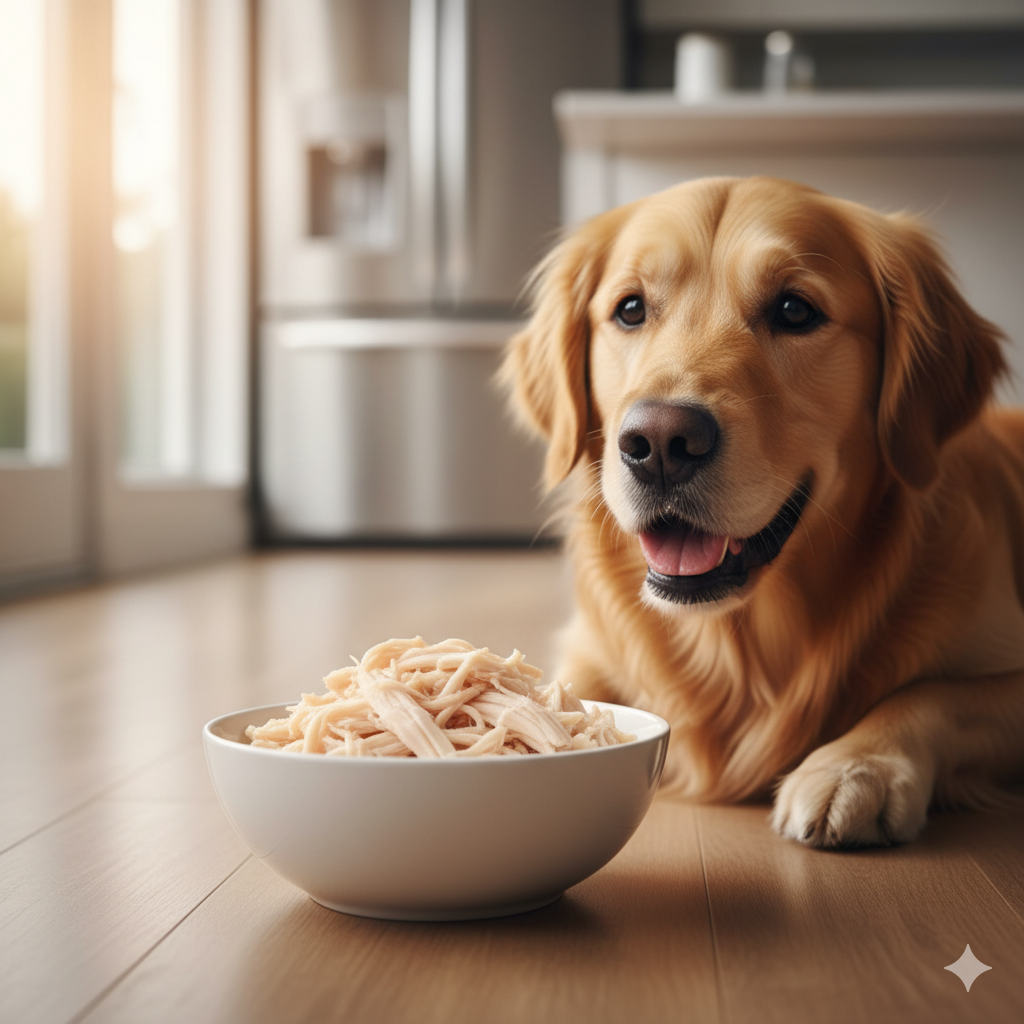
Can Dogs Eat Chicken? A Vet-Approved Safety Guide
Whether it’s a distinct protein source in kibble or a bland diet for an upset stomach, chicken is ubiquitous in the canine world. But is it always safe?
Quick Answer
Yes, plain, properly prepared chicken is safe and beneficial for most dogs. However, its safety is conditional: it must be cooked, boneless, and skinless. While veterinarians widely recommend boiled chicken for digestive issues, it is also a top allergen and carries significant risks if fed as cooked bones or raw meat.
At a Glance
- Verdict: Safe (must be cooked, plain, boneless).
- Prep Rule: Boil, bake, or steam to 165°F; remove all skin.
- Portion Rule: As a topper: ¼ to ⅓ cup per 20 lbs of body weight.
- Puppy/Senior Note: Excellent for seniors/puppies due to high digestibility.
- Allergy Flag: Chicken is a common allergen; watch for itching or GI upset.
- Vet Caveat: Do not feed raw due to Salmonella risks.
- Warning: Cooked bones can splinter and puncture the stomach.
| Dog Size (lbs) | Daily Topper Portion (Approx.) | Notes |
|---|---|---|
| Extra-Small (2-20) | 0.25 cup (30-40g) | Shred finely to prevent choking. |
| Small/Med (21-50) | 0.3 – 0.75 cup | Reduce kibble to balance calories. |
| Large/Giant (51+) | 0.75 – 1.5 cups+ | Keep plain; no skin or fat. |
Health Benefits of Chicken
Chicken is a nutritional powerhouse, offering lean protein and essential vitamins that support muscle growth and energy.
- High-Quality Lean Protein: A 100g serving of cooked chicken breast provides approximately 31g of protein. This “complete” protein contains all essential amino acids required for muscle maintenance and tissue repair.
- Essential Amino Acids: Poultry is rich in limiting amino acids like tryptophan (for mood regulation) and lysine (for growth), often missing in plant-based fillers.
- B-Complex Vitamins: Chicken supplies Niacin (Vitamin B3) and Pyridoxine (Vitamin B6), which are fundamental for energy metabolism and nervous system health.
- Hydration Support: Broth from boiled, plain chicken increases fluid intake, which is particularly beneficial for dogs recovering from illness or surgery.

Risks and Considerations
While the meat is safe, the bones, skin, and preparation method can turn chicken into a deadly hazard.
- Cooked Bones (Acute Danger): Never feed cooked chicken bones. Cooking makes them brittle, leading to splintering that can cause choking, oral trauma, or life-threatening gastrointestinal perforation.
- Pancreatitis Triggers (Skin & Fat): Chicken skin and fatty cuts are dangerous. High-fat meals can trigger pancreatitis, a painful inflammation where enzymes digest the pancreatic tissue.
- Bacterial Contamination (Raw): The FDA and CDC advise against raw chicken due to Salmonella and Campylobacter. These pathogens risk the dog’s health and pose a zoonotic threat to humans in the home.
- Toxic Seasonings: Onions and garlic (part of the Allium family) are toxic to dogs, causing oxidative damage to red blood cells (hemolytic anemia). Never feed seasoned rotisserie or fried chicken.

Safe Serving Guide
To unlock the benefits of chicken safely, strict adherence to preparation protocols is required.
Step-by-Step Preparation
- Select the Right Cut: Use boneless, skinless chicken breast or thighs to minimize fat and eliminate bone risks.
- Cook Thoroughly: Boil, bake, or steam plain chicken until the internal temperature reaches 165°F (74°C) to kill harmful bacteria.
- Keep it Plain: Do not use salt, oils, butter, garlic, or onions. These additives are unnecessary and potentially toxic.
- Shred and Cool: Allow the meat to cool completely, then shred or chop into bite-sized pieces appropriate for your dog’s size.
Preparation Variations
- Cooked (The “Bland Diet”): Boiled chicken is the gold standard for a “bland diet” to treat vomiting or diarrhea, often mixed 1:2 or 1:3 with plain white rice.
- Raw: Not recommended by the AVMA, CDC, or FDA due to high risks of Salmonella and Listeria contamination.

Portion Guide
When used as a meal topper, reduce the regular food portion to prevent obesity. For treats, stick to the 10% rule.
- Extra-Small Dogs (2–20 lbs): 0.25 cup (approx. 30-40g)
- Small Dogs (21–30 lbs): 0.3 – 0.4 cup
- Medium Dogs (31–50 lbs): 0.5 – 0.75 cup
- Large Dogs (51–80 lbs): 0.75 – 1 cup
- Giant Dogs (81+ lbs): 1 – 1.5 cups
Nutritional Breakdown
The following data represents the full nutrient profile for 100g of cooked, skinless, boneless chicken breast. Note the high protein content and lack of carbohydrates.
Data Source: USDA FoodData Central (FDC #171077)
| Nutrient | Amount per 100g | Unit | Notes |
|---|---|---|---|
| Calories | 165 | kcal | Varies slightly by prep method. |
| Protein | 31.0 | g | Complete, high-quality protein. |
| Total Fat | 3.6 | g | Low fat if skinless. |
| Saturated Fat | 1.0 | g | |
| Monounsaturated Fat | 1.2 | g | |
| Polyunsaturated Fat | 0.8 | g | Rich in Linoleic Acid (Omega-6). |
| Cholesterol | 85 | mg | |
| Sodium | 74 | mg | Natural sodium; do not add salt. |
| Potassium | 256 | mg | Essential electrolyte. |
| Phosphorus | 228 | mg | Vital for skeletal structure. |
| Magnesium | 29 | mg | |
| Zinc | 1.0 | mg | Supports immune function. |
| Selenium | 27.6 | µg | Powerful antioxidant. |
| Niacin (Vitamin B3) | 13.7 | mg | Essential for energy metabolism. |
| Vitamin B6 | 0.6 | mg | Supports brain/nervous system. |
| Choline | 85 | mg | |
| Iron | 1.0 | mg | |
| Vitamin B12 | 0.3 | µg | |
| Carbohydrates | 0 | g | Chicken is carb-free. |
| Fiber | 0 | g | |
| Sugars | 0 | g |
Expert Citations
Leading veterinary organizations emphasize safety in preparation, specifically warning against bones and raw feeding.
“Dr. Jerry Klein, AKC Chief Veterinarian, warns that you should never give your dog cooked bones of any kind. They splinter into shards that can cause choking and serious damage to the dog’s mouth, throat, or intestines.”
— American Kennel Club (AKC)“The studies have always shown that most of the raw diets are contaminated with some pretty nasty bacteria, Salmonella and E. coli… people can be exposed to them just through handling their pet.”
— Dr. Michele Drake, DVM“Federal agencies are tightening regulations on raw pet food ingredients due to the risk of highly pathogenic avian influenza (type A H5N1) transmission… H5N1 is a ‘known or reasonably foreseeable hazard’ when using uncooked or unpasteurized ingredients.”
— American Veterinary Medical Association (AVMA)
FAQs
Can dogs eat chicken bones if they are cooked?
No. Cooked bones are brittle and can splinter, causing choking or puncturing the digestive tract. This is a medical emergency.
Is raw chicken safe for dogs?
No. While some advocate for it, major veterinary bodies (AVMA, FDA, CDC) advise against it due to the high prevalence of Salmonella and E. coli, which can sicken dogs and humans.
Can a dog live on just chicken and rice?
Not long-term. Chicken and rice is a temporary therapeutic diet for GI upset. It lacks essential minerals, vitamins, and fatty acids required for a balanced daily diet.
How do I know if my dog is allergic to chicken?
Symptoms include chronic itching (ears, paws), skin infections, or recurring vomiting/diarrhea. Diagnosis typically requires a strict elimination diet trial.
Conclusion
Chicken is a valuable protein source that supports muscle health and aids in recovery from digestive issues, provided it is cooked plain and served without bones or skin. Always treat chicken as a conditional food: safe when prepared with care, but potentially dangerous if safety protocols regarding bones and hygiene are ignored.
References
- American Kennel Club (AKC). “Can Dogs Eat Chicken?”
- APupAbove.com. “How and Why To Boil Chicken For Dogs”
- U.S. FDA. “Get the Facts! Raw Pet Food Diets can be Dangerous to You and Your Pet.”
- PetMD. “What To Do if Your Dog Ate a Chicken Bone.”
- American Veterinary Medical Association (AVMA). “Raw or Undercooked Animal-Source Protein Diets.”
- Bond Vet. “Chicken Allergy in Dogs: Everything You Need to Know.”
- NC State Veterinary Hospital. “Evaluating Pet Food.”
- U.S. Department of Agriculture, Agricultural Research Service. (2019). Chicken, breast, boneless, skinless, raw. FoodData Central. FDC ID: 2646170. https://fdc.nal.usda.gov/food-details/2646170/nutrients