
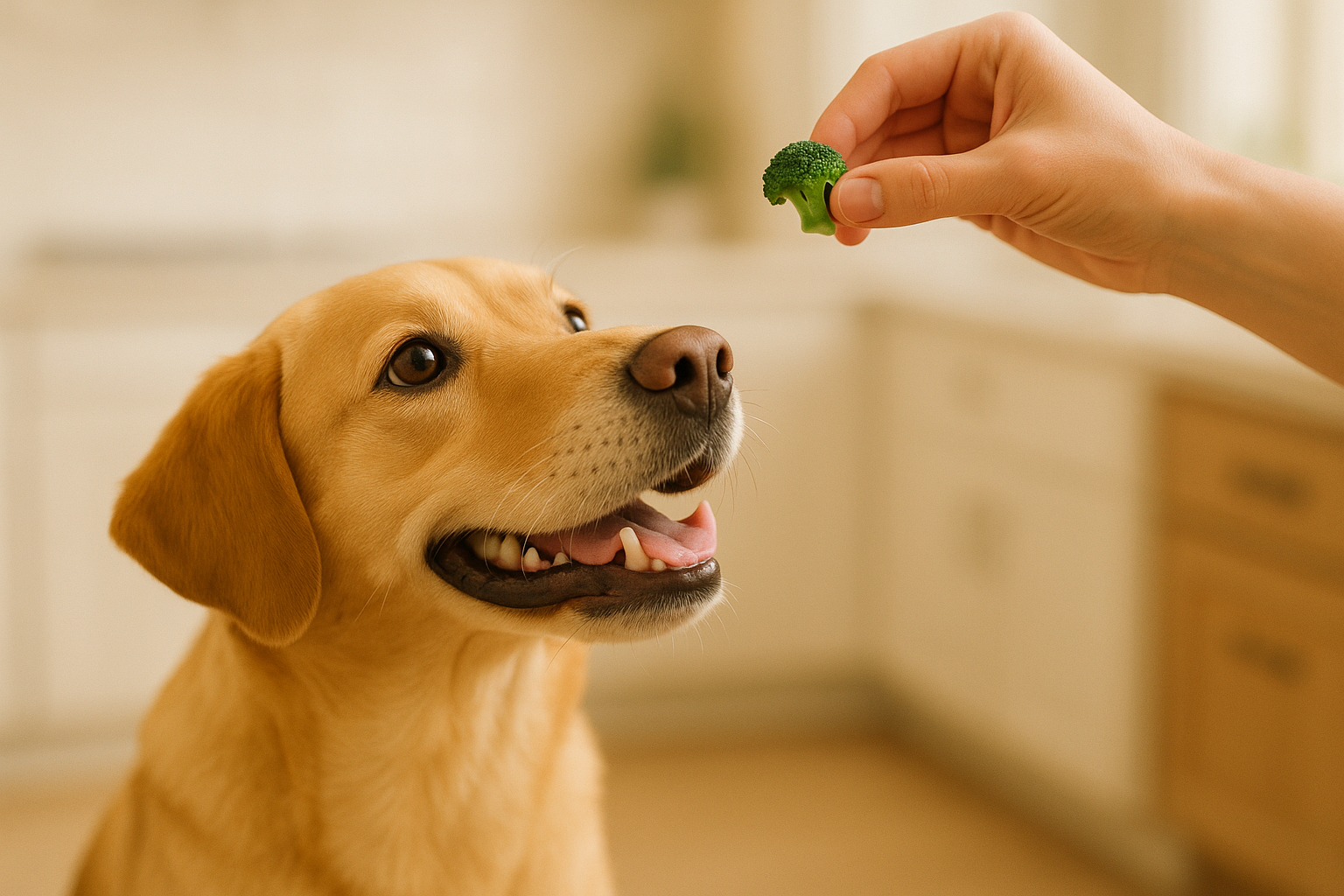
Can Dogs Eat Broccoli? A Vet-Approved Guide
This article is an AI-generated educational tool. The information provided is not a substitute for professional veterinary advice. Always consult with your veterinarian.
When you’re chopping broccoli for dinner, it’s hard to ignore those hopeful puppy-dog eyes staring up at you. It’s natural to wonder: can your canine companion share this crunchy green vegetable?
We’ve got good news! The definitive, veterinarian-backed answer is yes, dogs can eat broccoli. Authoritative sources like the American Kennel Club (AKC) and PetMD agree that broccoli is non-toxic and can be a safe, healthy addition to a dog’s diet when—and this part is important—it’s offered correctly.
However, this “yes” comes with a few critical warnings about moderation and proper preparation. Broccoli should always be considered a low-calorie, nutrient-dense ‘functional treat,’ not a replacement for their balanced dog food. This guide will walk you through all the benefits, risks, and vet-approved ways to share broccoli safely with your best friend.
Quick Answer: Can Dogs Eat Broccoli?
Yes, dogs can eat broccoli in moderation. Veterinary sources like PetMD confirm it’s a safe, low-calorie treat packed with fiber, Vitamin C, and K. However, the florets contain compounds called isothiocyanates, which can cause gastrointestinal (GI) upset if you feed too much (over 10% of their daily calories). The stalks also pose a serious choking hazard if they aren’t chopped finely. Always serve it plain—steaming is the best and safest method.
At a Glance:
- Verdict: Yes, broccoli is safe in moderation (less than 10% of daily calories).
- Preparation: Wash it, chop both the stalks and florets finely, and serve it plain. Steaming is the ideal preparation method.
- Portion: Keep all treats, including broccoli, under 10% of your dog’s total daily calories. Giving more than 25% of their daily calories in broccoli is considered toxic.
- Puppies: It’s not recommended for young puppies. Their digestive systems are more sensitive and may not handle the high fiber well.
- Risks: Florets can cause GI upset (gas, diarrhea) if overfed. The stalks are a serious choking or obstruction hazard if not chopped small.
- Benefits: It’s a great source of vitamins K, C, and A, plus fiber and the anti-inflammatory compound sulforaphane.
- Watch-outs: Introduce it slowly to see how your dog reacts. Avoid it completely if your dog has known GI sensitivities.
Serving Size by Dog Weight (Occasional Treat)
| Dog Size | Weight Range | Recommended Serving |
|---|---|---|
| Extra-Small | 2–20 lbs | 1–2 small, bite-sized pieces |
| Small | 21–30 lbs | 3–4 bite-sized pieces |
| Medium | 31–50 lbs | 5–6 bite-sized pieces |
| Large | 51–90 lbs | A small handful of bite-sized pieces |
| Extra-Large | 91+ lbs | A large handful of bite-sized pieces |
Source: Serving guidelines synthesized from veterinary sources, including PetMD.
The Health Benefits of Broccoli for Dogs
Broccoli is more than just a crunchy, low-calorie snack; it’s a nutritional powerhouse. It offers essential vitamins, plenty of fiber, and potent plant compounds called phytonutrients. The most famous of these is sulforaphane, which is known for its anti-cancer and anti-inflammatory properties.
Sulforaphane: Anti-Cancer & Anti-Inflammatory Support
This is the big one. Broccoli contains a compound that, when chewed or chopped, converts to sulforaphane. This is a potent antioxidant and anti-inflammatory agent. Research, including a study published on PubMed, shows that sulforaphane can be absorbed by dogs and may help support cellular health, making it a valuable addition for its potential protective properties.
Rich Source of Essential Vitamins
Broccoli is loaded with vitamins that support your dog’s overall health:
- Vitamin K: This is crucial for strong bone health and is essential for blood clotting.
- Vitamin C: A powerful antioxidant that supports a healthy immune system.
- Beta-Carotene: The body converts this into Vitamin A, which is vital for healthy vision, skin, and immune function.
High in Dietary Fiber
The fiber in broccoli is great for your dog’s digestive system. It adds bulk to their stool, which promotes regularity and can help prevent constipation. Fiber also helps dogs feel full, which is fantastic for weight management. As a bonus, fiber acts as a prebiotic, feeding the beneficial bacteria in your dog’s gut and supporting their immune system.
Contains Valuable Minerals
Broccoli also delivers potassium, which is essential for healthy nerve and muscle function (including the heart!). It also provides smaller amounts of calcium and manganese, which contribute to bone health and metabolism.

Risks and Considerations for Feeding Broccoli
While broccoli is beneficial, it’s definitely not risk-free. The two main things you absolutely must be aware of are the potential for an upset stomach if you overfeed it and the very real choking hazard from the stalks.
Gastrointestinal Irritation (Isothiocyanates)
This is the main reason why moderation is so important. Broccoli florets contain natural compounds called isothiocyanates (sulforaphane is one of them). In small, treat-sized doses, they’re beneficial. But in large quantities, they can irritate your dog’s gastrointestinal tract, leading to uncomfortable gas, bloating, stomach pain, and diarrhea.
This is why veterinary experts, including those at the American Kennel Club, strongly recommend that treats like broccoli make up no more than 10% of your dog’s total daily calories. They also note that feeding a dog more than 25% of their daily intake in broccoli is considered toxic and can cause severe GI upset.
Choking Hazard (Stalks)
This is a serious physical risk that many owners overlook. The tough, fibrous broccoli stalks are very difficult for dogs to chew thoroughly, and they can easily swallow large pieces. These pieces can get lodged in the esophagus, causing choking or an internal obstruction, which is a veterinary emergency.
You can feed your dog the stalks, but they must be prepared properly.
Not Ideal for All Dogs
Because of the high fiber and gas-producing compounds, broccoli isn’t the best choice for every dog. Young puppies have very sensitive digestive systems and should probably skip it. Likewise, if your dog has pre-existing GI sensitivities or a history of pancreatitis, it’s best to avoid broccoli unless your personal vet has given you the all-clear.

How to Safely Prepare and Serve Broccoli
Serving broccoli safely all comes down to careful preparation and portion control.
Step 1: Wash Thoroughly
Just as you would for your family, rinse the broccoli well under running water to remove any dirt, pesticides, or potential bacteria.
Step 2: Chop Finely
This is the most critical safety step. Chop both the florets and the stalks into small, bite-sized pieces that are appropriate for your dog’s size. For stalks, this is non-negotiable and prevents the choking hazard.
Step 3: Serve Plain (Steamed Preferred)
This is crucial: always serve broccoli plain. No salt, no oils, no butter, and definitely no cheese. These additives pile on fat and calories, and some seasonings we use, especially garlic and onion powder, are toxic to dogs.
Preparation Methods
- Raw: This preserves the most nutrients, but it’s also harder for your dog to digest and carries the highest choking risk from the firm stalks (even when chopped).
- Steamed: (Best method.) This is the vet-recommended favorite. Steaming softens the tough stalks, making them much safer and easier to digest while still retaining most of the nutrients. Just be sure to let it cool completely before serving!
- Boiled: This is also acceptable for softening the stalks, but steaming is preferred because boiling can cause more of the water-soluble vitamins (like Vitamin C) to leach out into the water.
- Cooked with additives: (Unsafe.) Never, ever serve broccoli that’s been cooked with oils, butter, salt, cheese, or seasonings.

What Vets Say About Broccoli for Dogs
Veterinary experts are clear: broccoli is safe only if you follow the rules. The primary concerns are always portion size and the choking hazard.
Dr. Jerry Klein, DVM, Chief Veterinary Officer for the American Kennel Club, puts it clearly:
“Broccoli is considered safe in dogs if the total amount ingested is less than 10 percent of their daily intake; more than 25 percent is considered toxic.”
Dr. Klein also gives this critical warning about the stalks:
“[Broccoli stalks] have been known to cause obstruction in the esophagus.”
This expert advice confirms that the “10% rule” isn’t just a suggestion—it’s the line between a healthy treat and a potential problem. And the warning about stalks underscores why fine-chopping and steaming are so important.
Nutritional Breakdown: Broccoli (Raw)
Here is the detailed nutritional profile for 100 grams (about 3.5 ounces) of raw broccoli. Keep in mind that cooking, especially boiling, will reduce the levels of water-soluble vitamins.
Data Source: USDA FoodData Central (FDC ID: 169967)
| Nutrient | Amount per 100g |
|---|---|
| Calories | 34 kcal |
| Protein | 2.82 g |
| Total Fat | 0.37 g |
| Carbohydrate | 6.64 g |
| Dietary Fiber | 2.6 g |
| Total Sugars | 1.7 g |
| Water | 89.3 g |
| Calcium | 47 mg |
| Iron | 0.73 mg |
| Magnesium | 21 mg |
| Phosphorus | 66 mg |
| Potassium | 316 mg |
| Sodium | 33 mg |
| Zinc | 0.41 mg |
| Copper | 0.049 mg |
| Manganese | 0.21 mg |
| Selenium | 2.5 µg |
| Vitamin C | 89.2 mg |
| Thiamin (B1) | 0.071 mg |
| Riboflavin (B2) | 0.117 mg |
| Niacin (B3) | 0.639 mg |
| Pantothenic acid (B5) | 0.573 mg |
| Vitamin B6 | 0.175 mg |
| Folate (B9) | 63 µg |
| Choline | 18.7 mg |
| Vitamin A (RAE) | 31 µg |
| Carotene, beta | 361 µg |
| Carotene, alpha | 0 µg |
| Vitamin A (IU) | 623 IU |
| Lutein + zeaxanthin | 1403 µg |
| Vitamin E (alpha-tocopherol) | 0.78 mg |
| Vitamin K (phylloquinone) | 101.6 µg |
Frequently Asked Questions (FAQ)
Can puppies eat broccoli?
It’s generally not recommended. Puppies have very sensitive digestive systems, and broccoli’s high fiber content and gas-producing nature can easily cause significant GI upset. It’s best to stick to their puppy food and vet-approved treats.
Can dogs eat broccoli stalks/stems?
Yes, but only if prepared correctly. On their own, they are a serious choking and obstruction hazard. They MUST be chopped into small, bite-sized pieces and, ideally, steamed to soften them before serving.
Is raw or cooked broccoli better for dogs?
Steamed is often the best and safest choice. Raw broccoli retains slightly more nutrients but is much harder to digest and poses a higher choking risk from the firm stalks. Steaming softens the stalks, improving safety and digestibility while preserving most of the nutrients.
How much broccoli is toxic to a dog?
According to the AKC, consuming more than 25% of a dog’s daily calories from broccoli is considered potentially toxic. This is due to the isothiocyanates, which can cause severe gastric irritation. Sticking to the 10% rule for all treats prevents this risk entirely.
What should I do if my dog eats too much broccoli?
Monitor your dog closely for signs of GI distress, like excessive gas, bloating, vomiting, or diarrhea. Mild symptoms will usually resolve on their own. However, if the symptoms are severe, last for more than 24 hours, or if your dog seems to be in pain, contact your veterinarian right away.
Can dogs eat broccoli every day?
No, it’s not recommended. Broccoli should be an occasional treat, not a daily supplement. Feeding it every day can lead to cumulative GI upset and could unbalance their carefully formulated diet.
Conclusion: A Healthy Treat with Caveats
So, what’s the bottom line? Broccoli can be a fantastic, low-calorie, and nutritionally beneficial treat for most adult dogs. It offers a great crunch along with vitamins, fiber, and health-promoting compounds like sulforaphane.
However, its safety all comes down to two things: moderation and preparation.
Remember the 10% rule—treats should never be more than 10% of your dog’s daily calories. This prevents the GI upset broccoli is known to cause. And to prevent a choking emergency, you must chop the stalks finely and, preferably, steam the broccoli to soften it.
As with any new food, introduce it slowly and in tiny amounts to see how your dog’s system handles it. When in doubt, a quick call to your vet is always the best way to ensure you’re giving your dog a treat that is both safe and healthy.
References
- American Kennel Club (AKC). (2025, July 20). Can Dogs Eat Broccoli?
- DogCancer.com. (2025, July 20). Broccoli For Dogs
- Dutch. (2025, July 20). Can Dogs Eat Broccoli: Is It Safe?
- Jinx. (2025, July 20). Is Broccoli Good for Dogs?
- MetLife Pet Insurance. (2025, July 20). Can Dogs Eat Broccoli? What to Know
- Petco. (2025, July 20). Can Dogs Eat Broccoli? Benefits & Risks
- PetMD. (2025, July 20). Can Dogs Eat Broccoli?
- PubMed (NIH). (2018). Sulforaphane absorption and histone deacetylase activity…
- Pumpkin Pet Insurance. (2025, July 20). Can Dogs Eat Broccoli?
- Purina. (2025, July 20). Can Dogs Eat Broccoli? A Guide to Safety
- Purina UK. (2025, July 20). Can Dogs Eat Broccoli and When Is It Too Much?
- Raw Bistro. (2025, July 20). Can Dogs Eat Broccoli? Benefits…
- Taste of the Wild. (2025, July 20). Can My Dog Eat Broccoli?
- USDA FDC. (2019, April 1). Broccoli, raw (FDC ID: 169967)