
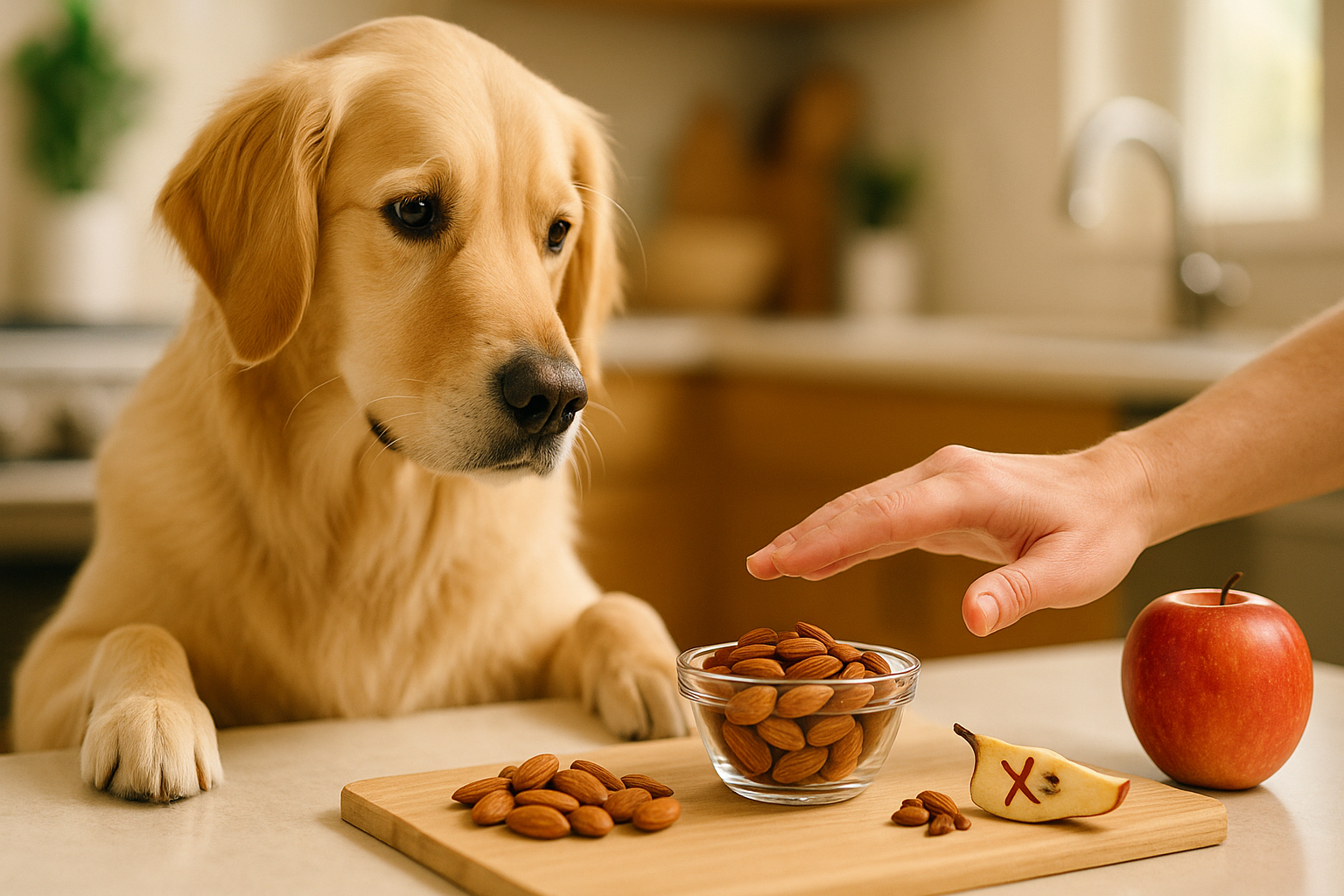
Can Dogs Eat Almonds? A Vet-Approved Guide
Almonds, a staple in human health food, might seem like a good choice to share with your dog. However, when it comes to the question “Can dogs eat almonds?” the veterinary community offers a firm and resounding “no”.
While sweet almonds—the kind typically sold for snacking—are not toxic to dogs in the same way as macadamia nuts, they are fraught with risks. The primary concerns are not about toxicity but about severe mechanical and digestive dangers, including choking and life-threatening pancreatitis.
Are There Any Health Benefits to Almonds?
While almonds contain nutrients like vitamin E, protein, and healthy fats for humans, these are not delivered in a form that is easily digestible or beneficial for dogs. Any minor nutritional value is heavily outweighed by the significant health risks.
No Significant Benefits
There are no safe, meaningful health benefits to feeding dogs almonds. Your dog should get all the nutrients they need from their complete and balanced commercial dog food.
Risks and Considerations for Dogs Eating Almonds
The dangers of almonds are numerous and severe. The consensus among veterinary professionals is that the risks associated with almonds far outweigh any potential benefits, making them a food to be kept securely away from your dog.
1. Choking and Obstruction Hazard
Almonds are a significant choking hazard, especially for small breeds. Dogs often swallow food whole, and a hard almond can easily become lodged in the esophagus, windpipe, or intestines, potentially requiring emergency surgery.
2. High Fat Content and Pancreatitis
Almonds are very high in fat. A sudden ingestion of a high-fat food like almonds can trigger pancreatitis—a severe, painful, and potentially fatal inflammation of the pancreas. This is a medical emergency with symptoms like severe vomiting, abdominal pain (your dog may adopt a ‘praying’ position), and lethargy.
3. Gastrointestinal Distress
A dog’s digestive system is not designed to process the proteins and fats in nuts effectively. As a result, even a small number of almonds can cause significant gastrointestinal upset, including vomiting, diarrhea, gas, and abdominal pain.
4. Toxic Seasonings and Additives
Almonds prepared for human consumption are often salted or flavored. High salt content can lead to salt toxicity. Seasonings like garlic and onion powder are toxic to dogs. Furthermore, sugar-free almonds may be sweetened with xylitol, which is extremely toxic and can be fatal.
5. Bitter Almond Toxicity (Cyanide)
It is critical to distinguish between ‘sweet’ almonds and ‘bitter’ almonds. Bitter almonds contain cyanide and are extremely toxic. Ingesting as few as seven bitter almonds can be lethal to a dog.
6. Other Health Concerns
Almonds are rich in phosphorus, which can contribute to the formation of bladder stones. Like other nuts, they can also harbor a mold called Aspergillus, which produces aflatoxins that are highly toxic to a dog’s liver.

A Guide to Almonds and Almond-Based Products
Given the high risks, veterinarians do not recommend offering almonds in any form. The safest approach is to avoid them entirely. Below is a guide to the risks associated with different almond-based products.
- Understand the Risks of Different Forms: Whole, flavored, and bitter almonds all pose unique, severe dangers. Processed products like almond butter and milk also carry risks, primarily from high fat and toxic additives.
- What to Do If Your Dog Eats Almonds: If your dog eats one or two plain, sweet almonds, monitor them closely for signs of choking, gagging, vomiting, or diarrhea. If your dog is a small breed, ate a large number, or ate any flavored/salted almonds, contact your veterinarian immediately.
- Choose Safer Alternatives: If you want to give your dog a satisfying crunch, offer safe, canine-appropriate treats like fresh carrots, green beans, or commercial dog biscuits.
Risks of Different Almond Preparations
| Almond Form | Verdict | Key Risks and Guidance |
|---|---|---|
| Whole (Raw/Roasted) | AVOID | Highest risk for choking and intestinal obstruction. High fat poses a severe pancreatitis risk. |
| Salted/Flavored | AVOID (DANGEROUS) | All the risks of plain almonds, plus salt toxicity and poisoning from garlic, onion, or xylitol. |
| Bitter Almonds | AVOID (HIGHLY TOXIC) | Contain cyanide and can be lethal in very small quantities. |
| Almond Butter | EXTREME CAUTION | Must be 100% xylitol-free. Must be unsalted and unsweetened. High fat still poses a pancreatitis risk; only a tiny lick on rare occasions. |
| Almond Milk | CAUTION | Must be xylitol-free and unsweetened. Offers no nutritional benefits and can cause digestive upset. |

Portion Guide: Not Recommended
Due to the severe risks of choking and pancreatitis, feeding almonds as a ‘treat’ is not recommended by veterinarians. The 10% treat rule should be applied to safer alternatives like carrots or green beans.
Portion guidance is not provided as almonds are not recommended for dogs.
| Dog Size | Weight Range | Daily Portion (approx.) |
|---|---|---|
| Extra-Small Dogs | 2–20 lbs | Not Recommended (High choking & pancreatitis risk) |
| Small Dogs | 21–30 lbs | Not Recommended (High choking & pancreatitis risk) |
| Medium Dogs | 31–50 lbs | Not Recommended (High choking & pancreatitis risk) |
| Large Dogs | 51–80 lbs | Not Recommended (Pancreatitis risk) |
| Giant Dogs | 81+ lbs | Not Recommended (Pancreatitis risk) |
Nutritional Breakdown of Almonds
The following is the nutritional information for 100g of raw, sweet almonds. While they contain nutrients, they are not easily digestible for dogs, and the high fat and phosphorus levels pose health risks.
Data Source: USDA FoodData Central (FDC ID: 170567), “Almonds, raw”
| Nutrient | Amount per 100g | Unit | Notes |
|---|---|---|---|
| Calories | 579 | kcal | Very high in fat and calories, contributing to pancreatitis and obesity risks. |
| Total lipid (fat) | 49.93 | g | Extremely high fat content is a primary trigger for pancreatitis. |
| Protein | 21.15 | g | Difficult for dogs to digest properly. |
| Phosphorus, P | 481 | mg | High phosphorus content can contribute to bladder stones in susceptible dogs. |
| Carbohydrate | 21.55 | g | |
| Fiber, total dietary | 12.5 | g | |
| Sugars, total | 4.35 | g | |
| Calcium, Ca | 269 | mg | |
| Iron, Fe | 3.71 | mg | |
| Magnesium, Mg | 270 | mg | |
| Potassium, K | 733 | mg | |
| Sodium, Na | 1 | mg | Note: This is for raw, unsalted almonds. Salted almonds are dangerously high in sodium. |
| Zinc, Zn | 3.12 | mg | |
| Vitamin C | 0 | mg | |
| Thiamin | 0.205 | mg | |
| Riboflavin | 1.138 | mg | |
| Niacin | 3.618 | mg | |
| Vitamin B-6 | 0.137 | mg | |
| Folate, DFE | 44 | µg | |
| Vitamin B-12 | 0 | µg | |
| Vitamin A, IU | 1 | IU | |
| Vitamin E | 25.63 | mg | |
| Vitamin K | 0 | µg | |
| Fatty acids, saturated | 3.802 | g | |
| Fatty acids, monounsaturated | 31.545 | g | |
| Fatty acids, polyunsaturated | 12.329 | g | |
| Cholesterol | 0 | mg |
Note on Bioavailability: A dog’s digestive system is not efficient at processing nuts to extract these nutrients. The risks associated with the high fat and phosphorus content outweigh any potential benefits.
What the Experts Say
Veterinarians and leading pet health organizations like the American Kennel Club (AKC) are aligned in their cautious stance against feeding almonds to dogs.
American Kennel Club (AKC)
“While sweet almonds… are not toxic to dogs… they are fraught with risks… The primary concerns surrounding almonds are not about toxicity but about mechanical and digestive dangers. Their size, hardness, and high fat content create a perfect storm of potential health problems, ranging from mild gastrointestinal upset to life-threatening emergencies.”
Hill’s Pet Nutrition
“Almond butter is generally safer than whole almonds because it eliminates the choking hazard and is easier to digest. However, it is still very high in fat and calories, meaning it carries the same risk of pancreatitis and weight gain if given in excess.”
Dr. Emily Singler, VMD (as cited by Fetch Pet Insurance)
“[For almond butter, Dr. Singler] suggests no more than 1 teaspoon to 1 tablespoon at a time, depending on the dog’s size.”
Frequently Asked Questions (FAQ) About Almonds for Dogs
Q: What should I do if my dog eats an almond?
A: If your dog eats one or two plain, sweet almonds, there is no need to panic. Monitor them closely for any signs of choking, gagging, vomiting, or diarrhea. If your dog is a small breed, the risk of obstruction is higher. If your dog eats a large number of almonds or any flavored/salted almonds, contact your veterinarian or an emergency vet clinic immediately.
Q: Are almonds toxic to dogs?
A: Sweet almonds are not toxic in the way that macadamia nuts or grapes are. However, they are considered unsafe due to the high risk of choking, intestinal obstruction, and pancreatitis. Bitter almonds, on the other hand, are highly toxic as they contain cyanide.
Q: How many almonds can kill a dog?
A: For sweet almonds, the danger is not typically from toxicity but from complications like pancreatitis or obstruction, so there is no specific lethal number. However, for bitter almonds, as few as seven can be fatal due to cyanide poisoning.
Q: Can dogs eat almond butter?
A: Only with extreme caution. It MUST be xylitol-free, as xylitol is extremely toxic to dogs. It should also be unsalted and unsweetened. Because it is still very high in fat and carries a pancreatitis risk, it should only be given as a tiny, occasional treat.
Q: My dog loves the taste of almonds. What are some safe, crunchy alternatives?
A: There are many safer alternatives. Fresh vegetables like carrots or green beans offer a healthy, satisfying crunch. You can also use commercially available dog biscuits or treats specifically formulated for canine digestion.
Conclusion: Keep Almonds Away From Your Dog
In conclusion, dogs should not eat almonds. The veterinary consensus is firm: the risks of choking, intestinal blockage, and life-threatening pancreatitis far outweigh any potential nutritional value.
Keep your almonds securely stored away from your dog. Stick to safe, canine-approved treats like fresh vegetables to give your dog a satisfying crunch without the danger.
References
- American Kennel Club (AKC). (2025, July 18). Can Dogs Eat Almonds? Are Almonds Bad for Dogs?
- Hill’s Pet Nutrition. (2025, July 18). Can Dogs Eat Almonds? | Hill’s Pet.
- Pawlicy Advisor. (2025, July 18). Can Dogs Eat Almonds? Are Almonds Safe For Dogs?
- Greater Savannah Veterinary Services (GSVS). (2025, July 18). My Dog Ate Almonds — When Is It an Emergency?
- Chewy.com. (2025, July 18). Can Dogs Eat Almonds? Everything You Need to Know.
- Wag!. (2025, July 18). Almond Poisoning in Dogs.
- Embrace Pet Insurance. (2025, July 18). Can Dogs Eat Almonds | Are Almonds Bad or Toxic for Dogs.
- PetMD. (2025, July 18). Pancreatitis in Dogs: Signs, Causes and Treatment.
- MasterClass. (2025, July 18). Can Dogs Eat Almond Butter? 5 Tips for Dog-Safe Almond Butter.
- Fetch Pet Insurance. (2025, July 18). Can dogs eat almond butter?
- U.S. Department of Agriculture, Agricultural Research Service. (2019, April 1). FoodData Central: Almonds, FDC ID: 170567.