
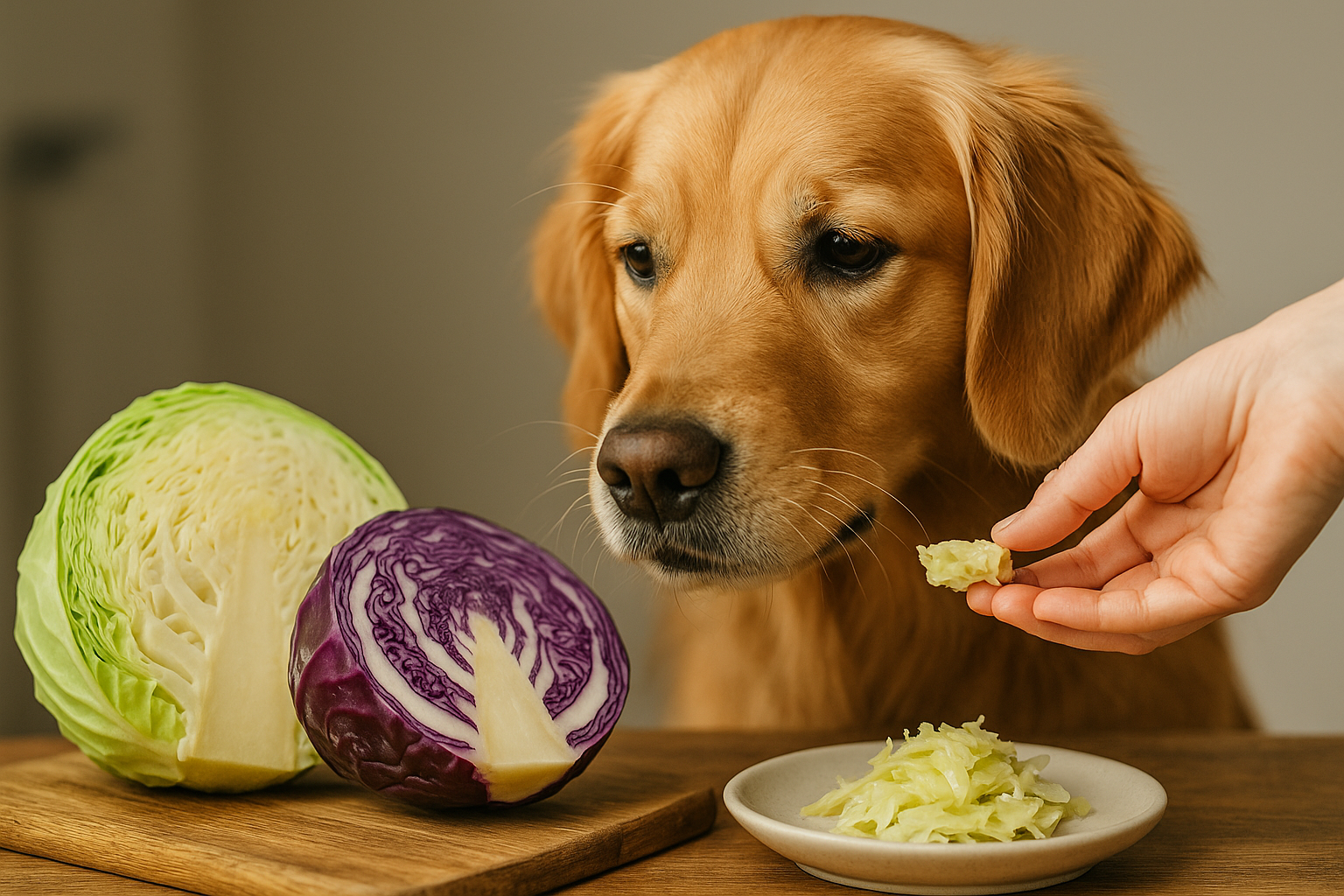
Can Dogs Eat Cabbage? A Vet-Approved Guide
Disclaimer: This article is an AI-generated educational tool. The information provided is not a substitute for professional veterinary advice. Always consult with your veterinarian before making changes to your dog’s diet.
As you chop cabbage for coleslaw or stir-fry, your dog might eye the crunchy leaves with interest. It’s natural to wonder if this common vegetable is a safe snack to share.
The definitive answer, supported by veterinary experts, is yes—cabbage is non-toxic and can be a safe addition to a dog’s diet when offered in moderation and prepared correctly (AKC, PetMD). This low-calorie cruciferous vegetable offers nutritional benefits but also carries risks, primarily significant gas production (AKC, Daily Paws). Safety depends on portion size, preparation, and your dog’s individual health. This guide covers the science-backed benefits, potential risks, and vet-approved serving methods.
Quick Answer: Can Dogs Eat Cabbage?
Yes, dogs can eat cabbage, according to vets (PetMD). Serve cooked (steamed/boiled), plain, and chopped in moderation. It’s low-calorie and provides vitamins K & C. However, it causes significant gas and should be avoided for dogs prone to bladder stones or with thyroid issues (Chewy, Whole Dog Journal).
At a Glance:
- Verdict: Yes, in strict moderation if cooked plain and chopped (PetMD).
- Preparation: Best served cooked (steamed/boiled) and chopped; remove the tough core (PetMD, Whole Dog Journal). Raw is harder to digest and riskier (Chewy).
- Portion: Keep treats under 10% of daily calories; start very small (teaspoon) (Basepaws).
- Puppies: Use caution; puppies have sensitive digestive systems. Always consult your vet (AKC).
- Risks: Significant gas/flatulence (AKC); thyroid issues if raw/excessive (especially if hypothyroid) (Whole Dog Journal); avoid for stone-forming breeds (Schnauzers, Bichons, etc.) (Chewy).
- Benefits: Low-calorie, high-fiber, vitamins K & C, antioxidants (especially red cabbage) (PetMD, Purina).
- Watch-outs: Introduce slowly; serve absolutely plain (no salt, oil, onions, garlic) (PetMD).
Serving Size by Dog Weight (Cooked, Chopped Treat)
| Dog Size | Weight Range | Recommended Daily Serving |
|---|---|---|
| Extra-Small | 2–20 pounds | 1 teaspoon or less |
| Small | 21–30 pounds | 1–2 teaspoons |
| Medium | 31–50 pounds | 1 tablespoon |
| Large | 51–90 pounds | 1–2 tablespoons |
| Extra-Large | 91+ pounds | ¼ cup or less |
Source: General nutritional models and veterinary guidelines
The Health Benefits of Cabbage for Dogs
Cabbage offers a surprising range of health benefits for dogs, including essential vitamins, minerals, fiber, and potent antioxidants, making it a valuable low-calorie treat when served appropriately (The PetLab Co.).
Low-Calorie Treat for Weight Management
With only about 25 calories per 100g, cabbage is an excellent low-calorie snack (USDA FDC, PetMD). Its high fiber and water content can help dogs feel full, which is beneficial for weight management plans (PetMD).
Rich in Essential Vitamins and Minerals
Cabbage provides Vitamin K, which is vital for blood clotting and bone health, and Vitamin C, a powerful antioxidant supporting the immune system (AKC, Purina). Red cabbage is generally richer in Vitamins C and A than green cabbage (FoodStruct). It also supplies B vitamins, crucial for energy metabolism, plus minerals like potassium and magnesium for muscle and nerve function (AKC).
Packed with Antioxidants (Especially Red Cabbage)
Antioxidants in cabbage protect cells from damage caused by free radicals (Healthline). Red cabbage is particularly rich in anthocyanins, the same powerful antioxidants found in blueberries, which studies suggest may improve cognitive function in older dogs (ResearchGate).
Contains Beneficial Sulforaphane
As a cruciferous vegetable, cabbage contains compounds that form sulforaphane when chopped or chewed (DogCancer.com). This compound has demonstrated anti-cancer, anti-inflammatory, and liver detoxification properties in studies and is considered bioavailable to dogs (DogCancer.com, NIH).
Supports Digestive Health
The high fiber content aids digestion by adding bulk to stool, promoting regularity and preventing constipation (PetMD). Some fiber acts as a prebiotic, feeding beneficial gut bacteria essential for gut health and immune function (PetMD).

Potential Risks of Feeding Cabbage to Dogs
While nutritious, cabbage isn’t risk-free. Understand the potential pitfalls before serving (Whole Dog Journal).
Significant Gas (Flatulence)
This is the most well-known side effect (AKC, Daily Paws). High fiber and natural compounds can lead to gas and bloating as gut bacteria ferment these compounds. While typically harmless, it can be unpleasant for the household! Cooking, slow introduction, and very small portions help mitigate this (Daily Paws).
Thyroid Interference (Goitrogens)
Cabbage contains goitrogens (thiocyanate) that can interfere with iodine uptake and thyroid hormone production, especially when eaten raw in large amounts (Whole Dog Journal). This is mainly a concern for dogs with pre-existing hypothyroidism (Whole Dog Journal). Cooking significantly reduces and deactivates these compounds—boiling can destroy up to 90% if the water is discarded—making the risk negligible for healthy dogs eating small, cooked portions (Kresser Institute).
Oxalate Content (Risk for Stone-Forming Breeds)
Cabbage contains oxalates (Chewy). In dogs predisposed to calcium oxalate bladder stones, high-oxalate foods can increase the risk of stone formation. Avoid feeding cabbage entirely to breeds prone to these stones, such as Miniature Schnauzers, Bichon Frises, Lhasa Apsos, Yorkshire Terriers, and Shih Tzus (Chewy, Whole Dog Journal, Veterinary Partner).

How to Safely Prepare and Serve Cabbage
To maximize the benefits and minimize the risks of gassiness and goitrogens, follow these vet-approved preparation and portioning steps.
Preparation Methods
- Cooked (Steamed/Boiled): Recommended. Softens fiber, improves digestibility, reduces gas, and deactivates most goitrogens (Whole Dog Journal). Must be served plain.
- Raw: Not Recommended. Harder to digest, increases gas, higher goitrogen content, and tougher texture poses more choking risk (Chewy).
- Cooked with Additives: Unsafe. Avoid cabbage cooked with salt, butter, oils, or toxic seasonings like onion and garlic (PetMD).
Step 1: Choose and Wash
Select fresh cabbage (red is most nutritious) and wash leaves thoroughly (PetMD).
Step 2: Remove Tough Parts
Discard outer leaves and cut out the hard central core/stem (PetMD).
Step 3: Chop Finely
Chop leaves into small, bite-sized pieces appropriate for your dog’s size to prevent choking (PetMD).
Step 4: Cook Plain (Steaming/Boiling Preferred)
Cooking is essential for digestibility and reducing goitrogens (Whole Dog Journal). Steam or boil until soft. Serve completely plain—no salt, butter, oil, or seasonings like toxic garlic or onion (PetMD).
Step 5: (Optional Pro Tip) Rest Before Cooking
To maximize the production of sulforaphane, let chopped cabbage rest for 5-10 minutes before cooking (Volhard Dog Nutrition, The Natural Dog Store).

What Vets Say About Cabbage
Veterinary experts confirm cabbage is safe in moderation but stress the importance of proper preparation and portion control due to gas production.
Dr. Jerry Klein, DVM, Chief Veterinary Officer for the AKC:
“…cabbage is safe to feed a dog… but only in moderation… Cabbage produces a large amount of gas, and many dogs may not be able to handle excessive gas production…” (AKC)
Nutritional Breakdown: Cabbage (Raw, Green)
The following is the nutritional data for 100g of raw, green cabbage. Cooking methods like boiling may reduce levels of water-soluble vitamins.
Data Source: USDA FDC (FDC ID: 169975)
| Nutrient | Amount per 100g | Unit |
|---|---|---|
| Calories | 25 | kcal |
| Protein | 1.28 | g |
| Total Fat | 0.1 | g |
| Carbohydrate | 5.8 | g |
| Dietary Fiber | 2.5 | g |
| Water | 92.18 | g |
| Vitamin C | 36.6 | mg |
| Vitamin K | 76 | µg |
| Potassium | 170 | mg |
Note: Cooking cabbage makes it easier to digest and significantly reduces goitrogen levels (Whole Dog Journal, Kresser Institute). Chopping before cooking and resting may increase sulforaphane (Volhard Dog Nutrition).
Frequently Asked Questions (FAQ)
Is red cabbage better than green cabbage for my dog?
Yes, while both are safe, red cabbage is generally more nutritious (PetMD). It has higher levels of Vitamin C, Vitamin A, and beneficial antioxidants called anthocyanins (FoodStruct).
Can puppies eat cabbage?
Use caution. Puppies have sensitive digestive systems. A tiny piece of cooked, plain cabbage is likely okay, but you should primarily focus on their formulated puppy food. Always ask your vet first (Basepaws, AKC).
What happens if my dog eats too much cabbage?
Expect significant, smelly gas, and possibly diarrhea or vomiting (PetMD). Ensure your dog has access to fresh water. Symptoms should pass within a day. Contact your vet if symptoms are severe, persist, or if you see signs of bloat (PetMD).
Is cabbage safe for dogs with thyroid problems?
No, it’s best avoided (Whole Dog Journal). Cabbage contains goitrogens that can interfere with thyroid function, especially in dogs already diagnosed with hypothyroidism (Whole Dog Journal). Consult your vet for safe treat options.
Are broccoli and cauliflower also safe for dogs?
Yes, other cruciferous vegetables like broccoli, cauliflower, and Brussels sprouts are generally safe when cooked plain, chopped, and given in moderation (Dutch, Whole Dog Journal). They share similar benefits and risks, like causing gas.
Conclusion: A Healthy Treat with Important Caveats
Cabbage can be a safe, low-calorie, and nutritious treat for many dogs, offering vitamins, fiber, and powerful antioxidants like sulforaphane (PetMD, NIH). Red cabbage provides the most nutritional benefits.
However, suitability is conditional. It must be cooked plain, chopped, and served in small portions to manage the high potential for gas. It should be completely avoided for dogs prone to oxalate stones or with thyroid issues (Whole Dog Journal). Always consult your vet before adding new human foods to your dog’s diet.
References
- American Kennel Club (AKC). Can Dogs Eat Cabbage?. https://www.akc.org/expert-advice/nutrition/can-dogs-eat-cabbage/
- Chewy.com. Can Dogs Eat Cabbage?. https://www.chewy.com/education/dog/food-and-nutrition/can-dogs-eat-cabbage
- Daily Paws. Can Dogs Eat Cabbage? Here’s What a Veterinarian Recommends. https://www.dailypaws.com/dogs-puppies/dog-nutrition/what-can-dogs-eat/can-dogs-eat-cabbage
- DogCancer.com. Cabbage for Dogs. https://www.dogcancer.com/articles/diet-and-lifestyle/cabbage-for-dogs/
- FoodStruct. Cabbage vs. Red cabbage — In-Depth Nutrition Comparison. https://foodstruct.com/nutrition-comparison/cabbage-vs-red-cabbage
- Kresser Institute. Goitrogenic Foods and Thyroid Health. https://kresserinstitute.com/goitrogenic-foods-and-thyroid-health/
- PetMD. Can Dogs Eat Cabbage?. https://www.petmd.com/dog/nutrition/can-dogs-eat-cabbage
- Purina. Vitamin C for Dogs…. https://www.purina.com/articles/dog/health/routine-care/vitamin-c-for-dogs
- The Natural Dog Store. 3 Benefits Of Sulforaphane For Dogs. https://thenaturaldogstore.com/blogs/health/sulforaphane-for-dogs
- USDA FDC. Cabbage, raw (FDC ID: 169975). https://fdc.nal.usda.gov/fdc-app.html#/food-details/169975/nutrients
- Veterinary Partner. Bladder Stones (Oxalate) in Dogs. https://veterinarypartner.vin.com/default.aspx?pid=19239&catId=254103&id=4951533
- Volhard Dog Nutrition. Anti-Inflammatory and Anti-Cancer Benefits of Sulforaphane…. https://www.volharddognutrition.com/blog/antiinflammatory-and-anticancer-benefits-of-sulforaphane-for-my-dog/
- Whole Dog Journal. Can Dogs Eat Cabbage?. https://www.whole-dog-journal.com/food/can-dogs-eat-cabbage/