
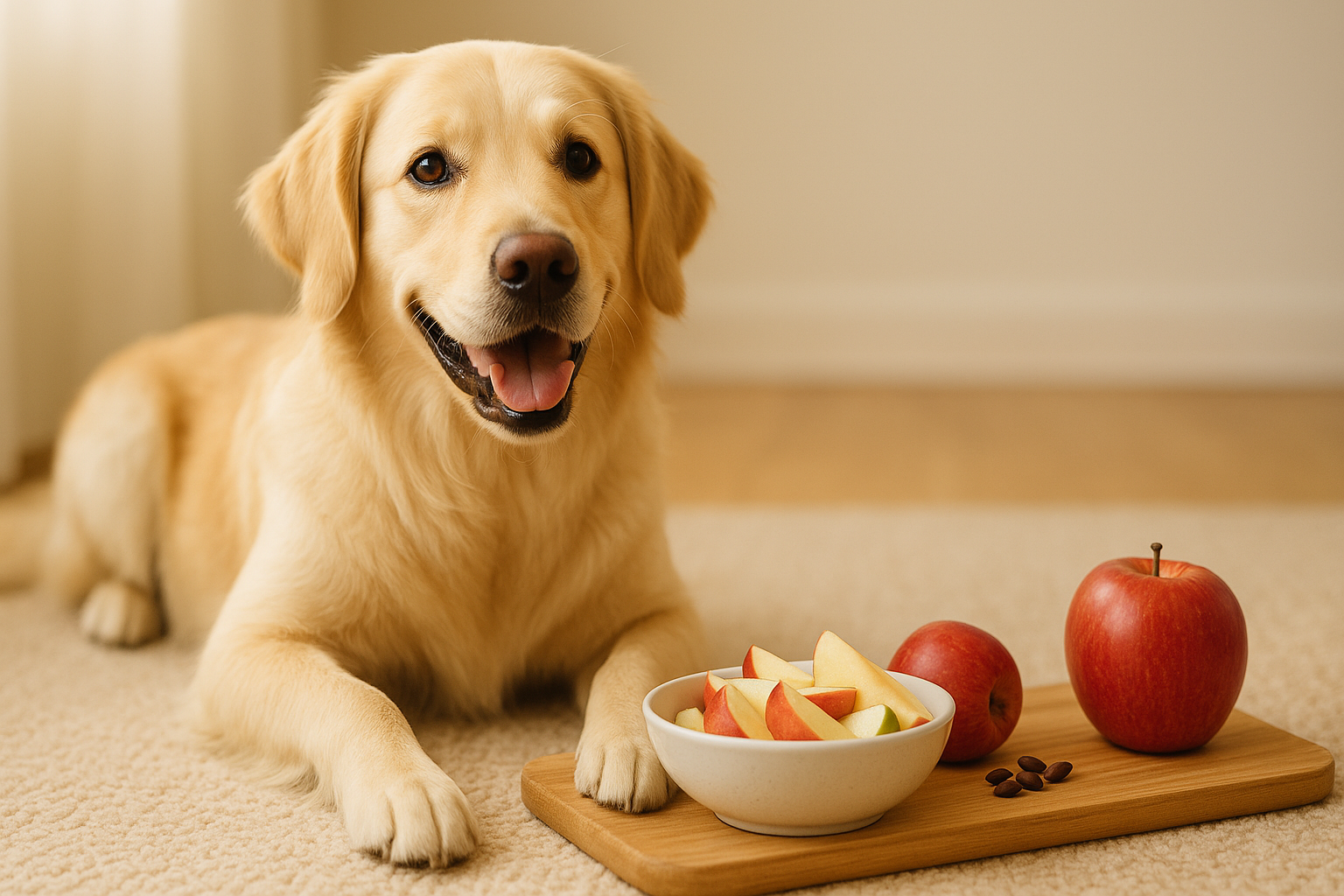
Can Dogs Eat Apples? Vet-Sourced Benefits, Risks & Portions
This article is an AI-generated educational tool. The information provided is not a substitute for professional veterinary advice. Always consult with your veterinarian.
That crisp, satisfying crunch of a fresh apple instantly piques the interest of most canine companions. Those hopeful eyes and that ever-so-slight head tilt beg the question: “Can I have a bite?”
The simple answer is yes, dogs can eat apples. However, this “yes” comes with crucial safety rules that every responsible pet owner must understand.
When prepared correctly, apples can be a nutritious, low-calorie treat that many dogs love. The key is that the core, seeds, and stem—which pose significant health risks—must always be removed.
A Quick Guide: Can Dogs Eat Apples?
Yes, dogs can safely eat apple flesh in moderation. Apples provide vitamins A and C, and fiber. However, you must remove the core, stem, and all seeds. The core is a choking hazard, and the seeds contain amygdalin, which releases cyanide when chewed.
- Verdict: Yes, the flesh is a safe treat in moderation.
- Main Rule: ALWAYS remove the entire core, stem, and all seeds.
- Portion Rule: Treats should follow the 10% rule of daily calories.
- Puppies: Yes, if cut into very small, puppy-safe pieces (core/seeds removed).
- Toxicity Flag: Seeds contain amygdalin (cyanide); cores are a severe choking/obstruction risk.
- Vet Caveat: Consult your vet, especially for dogs with diabetes due to sugar content.
- Watch-outs: NEVER feed products with xylitol (e.g., some applesauces); too much apple can cause GI upset.
The Health Benefits of Apples for Dogs
Apples aren’t just a tasty snack; they’re what you might call a “functional treat,” meaning they provide enjoyment and tangible health benefits. Their nutritional profile makes them a great alternative to high-fat, high-calorie commercial treats.
- Vitamins for Vitality: Apples are a source of Vitamin A, which supports healthy vision and immune function, and Vitamin C, a powerful antioxidant that helps reduce inflammation and protect cells from damage.
- Fiber for Digestive Health: As an excellent source of dietary fiber, apples help regulate bowel movements and support the overall digestive process, which can aid in preventing both constipation and diarrhea.
- Low-Calorie & Low-Fat: Apples are naturally low in calories, protein, and fat. This makes them an ideal snack for senior dogs, those on a weight management plan, and a safer option for dogs susceptible to pancreatitis.
- Hydration and Dental Health: With a water content of around 85-90%, apples are a wonderfully hydrating snack. The fibrous, crunchy texture can also create a mechanical scrubbing action against the teeth, helping to remove plaque.
The Risks: Why Cores and Seeds Are Dangerous
This is where we need to pay close attention. The safety of feeding apples is entirely conditional on proper preparation. While the fruit’s flesh is a source of nutrition, the core, seeds, and stem are sources of significant and potentially life-threatening danger.

- Choking & Obstruction Hazard: A far more common and immediate threat is the hard, firm apple core and rigid stem. These are perfectly sized to become lodged in a dog’s throat (choking) or cause a gastrointestinal obstruction (blockage), which is a life-threatening emergency often requiring surgery.
- Cyanide in Seeds: Apple seeds contain a compound called amygdalin, which releases hydrogen cyanide when crushed or chewed. While a dog would need to chew a massive quantity of seeds for a toxic dose, the risk is not zero. The ASPCA notes the clinical signs of cyanide poisoning are severe, including brick-red gums, dilated pupils, and difficulty breathing.
- Gastrointestinal Upset: Even safe apple flesh, when given in excess, can cause problems. The high fiber and natural sugar content can overwhelm a dog’s digestive system, leading to vomiting, diarrhea, and gas.
- Sugar Content (Diabetes Risk): The natural sugar in apples must be managed carefully for dogs that are overweight or have been diagnosed with diabetes, as it can cause unhealthy spikes in blood sugar. Consult a vet before giving apples to these dogs.
- Xylitol in Processed Products: NEVER give store-bought applesauce or apple products without checking the label. Many “sugar-free” products contain xylitol, which is extremely toxic to dogs. As VCA Animal Hospitals explain, even a small amount can cause a massive insulin release, leading to hypoglycemia, liver failure, and death.

How to Safely Serve Apples to Your Dog
Safely sharing apples with your dog is all about the “Preparation Principle.” The danger often lies not in the fruit itself, but in how it’s prepared and what’s added to it. Follow these steps to ensure this healthy fruit remains a safe treat.
- Wash Thoroughly: Wash the apple under cool running water to remove any pesticides, bacteria, or surface contaminants that may be present on the skin.
- Core and De-seed Completely: This is the most critical step. The entire core, including all seeds and the stem, must be removed. Using an apple corer is effective.
- Slice into Appropriate Sizes: Cut the remaining apple flesh into bite-sized pieces that are suitable for your dog’s size. For small dogs, thin slices or small cubes are best to prevent any choking risk.

Serving Ideas and Variations
- Raw: Fresh, crunchy slices are the simplest way to serve. The skin is safe and contains fiber, just ensure it’s washed thoroughly.
- Cooked: Plain, homemade, unsweetened applesauce is the only safe cooked option. NEVER use store-bought applesauce, as it often contains added sugar, preservatives, or toxic xylitol.
- Dehydrated: Homemade dehydrated apples (with no additives) are safe, but portions must be very small as the sugar is concentrated. Avoid store-bought versions.
- Frozen: Freezing prepared apple chunks creates a refreshing, icy treat that many dogs love, especially on a hot day.
Portion Guide: How Much Apple Can My Dog Have?
Moderation is key. To prevent GI upset and nutritional imbalance, all treats (including apples) should follow the 10% rule. Treats should never make up more than 10% of your dog’s total daily caloric intake.
Based on guidelines adapted from PetMD, here are some general serving suggestions for a daily treat:
| Dog Size | Weight Range | Recommended Serving Size (per day) |
|---|---|---|
| Extra-Small Dogs | 2–10 lbs | 1–2 small pieces (approx. 1-inch wide) |
| Small Dogs | 11–20 lbs | 2–3 pieces |
| Medium Dogs | 21–50 lbs | 3–4 pieces |
| Large Dogs | 51–90 lbs | 4–5 pieces |
| Giant Dogs | 91+ lbs | 5–6 pieces |
Serving size guidelines adapted from PetMD.
Nutritional Breakdown: Apples (Raw, with Skin)
The following is the nutritional data for 100 g of raw apple with skin (approx. one small apple). This data is for informational purposes and not for dietary formulation.
Data Source: USDA FoodData Central (FDC ID: 171688)
| Nutrient | Amount per 100g | Unit |
|---|---|---|
| Calories | 52 | kcal |
| Protein | 0.26 | g |
| Total Lipid (fat) | 0.17 | g |
| Carbohydrate | 13.81 | g |
| Fiber, total dietary | 2.4 | g |
| Sugars, total | 10.39 | g |
| Calcium, Ca | 6 | mg |
| Iron, Fe | 0.12 | mg |
| Magnesium, Mg | 5 | mg |
| Phosphorus, P | 11 | mg |
| Potassium, K | 107 | mg |
| Sodium, Na | 1 | mg |
| Zinc, Zn | 0.04 | mg |
| Vitamin C | 4.6 | mg |
| Thiamin | 0.017 | mg |
| Riboflavin | 0.026 | mg |
| Niacin | 0.091 | mg |
| Vitamin B-6 | 0.041 | mg |
| Folate, DFE | 3 | µg |
| Vitamin A, RAE | 3 | µg |
| Vitamin A, IU | 54 | IU |
| Vitamin E | 0.18 | mg |
| Vitamin K | 2.2 | µg |
| Water | 85.56 | g |
What the Vets Say
Veterinary experts and animal poison control centers agree that while apple flesh is safe, the seeds and core present serious risks.
- On Apple Varieties: “Compared to red apples, green apples are a little lower in carbohydrates and sugar and contain a little more vitamin A—an important nutrient for your dog,” says Jerry Klein, DVM, chief veterinary officer of the American Kennel Club, in an article for Chewy.
- On Cyanide: According to the ASPCA, the clinical signs of cyanide poisoning in a dog are distinct and severe. They include “brick-red mucous membranes (gums), dilated pupils, difficulty breathing, excessive panting, and shock.”
- On Xylitol: VCA Animal Hospitals warn that xylitol, a sweetener in some “sugar-free” applesauces, is “extremely toxic to dogs. Even a small amount can trigger a massive insulin release, leading to hypoglycemia (low blood sugar), seizures, liver failure, and death.”
Frequently Asked Questions (FAQ)
Q: Are apple seeds really poisonous to dogs?
A: Yes, apple seeds contain a compound called amygdalin, which can release cyanide when chewed and digested. However, the amount is very small. A dog would need to consume and thoroughly chew the seeds from a very large number of apples for it to be toxic. The seeds and core are a much bigger risk as a choking/obstruction hazard, which is why they must always be removed.
Q: What should I do if my dog ate an entire apple core?
A: If your dog ate an apple core, the primary concern is a physical obstruction or choking, not cyanide poisoning. Monitor your dog very closely for any signs of distress, including vomiting, lethargy, abdominal pain, or loss of appetite. If you notice any of these symptoms, contact your veterinarian immediately.
Q: Can puppies eat apples?
A: Yes, puppies can safely eat apples if the same rules are followed: the apple must be washed, and the core, stem, and all seeds must be removed. The flesh should be cut into very small, puppy-sized pieces to prevent choking and given in moderation per the 10% treat rule.
Q: Can dogs with diabetes eat apples?
A: This requires extreme caution. Apples contain natural sugars that can affect a dog’s blood sugar levels. For dogs with diabetes or those that are overweight, it is crucial to consult with your veterinarian before offering apples.
Q: Is store-bought applesauce safe for my dog?
A: Generally, no. Most commercial applesauce is unsafe as it contains added sugar, preservatives, or artificial ingredients. Critically, some “sugar-free” varieties are sweetened with xylitol, which is extremely toxic to dogs. The only safe option is a small amount of plain, homemade applesauce.
Q: Can dogs eat the apple skin?
A: Yes, the apple skin is safe for dogs to eat and contains a high concentration of the fruit’s fiber and nutrients. It is important to wash the apple thoroughly first to remove any pesticides or chemicals from the surface.
The Verdict: A Healthy Treat, Handled with Care
In conclusion, apples can be a wonderful, nutritious addition to your dog’s treat rotation. The flesh offers a low-calorie, high-fiber snack packed with beneficial vitamins and antioxidants.
However, the safety of this treat is entirely dependent on responsible preparation. The golden rules are non-negotiable: always wash the fruit, and always remove the core, stem, and every single seed. This mitigates the dangers of choking, intestinal blockage, and cyanide exposure. As with any new food, consult your veterinarian to ensure apples are a safe and happy treat for your individual dog.
References
- American Kennel Club (AKC). “Can Dogs Eat Apples? How to Safely Feed Apples to Dogs.“
- ASPCA. “Apple.” Toxic and Non-Toxic Plants.
- ASPCA. “Plum.” Toxic and Non-Toxic Plants. (Used to verify cyanide symptoms)
- Chewy. “Can Dogs Eat Apples?” (Featuring Dr. Jerry Klein, AKC)
- PetMD. “Can Dogs Eat Apples? Benefits, Risks, and Feeding Tips.“
- Pets Best. “What Foods Can Dogs Not Eat? Toxic Foods To Avoid.“
- U.S. Department of Agriculture (USDA). “Apples, raw, with skin.” FoodData Central, FDC ID: 171688.
- VCA Animal Hospitals. “Xylitol Toxicity in Dogs.” (Verified via DVM360)